Health and Safety Policy for Gardeners Hadley Wood
 This health and safety policy sets out the standards expected from Gardeners Hadley Wood in every gardening task we carry out. Our aim is to protect our team, clients, visitors, and anyone who may be affected by our work. We believe that safe practice is not separate from quality service; it is part of it. A careful approach helps us complete gardening work efficiently while reducing the risk of injury, property damage, or environmental harm.
We recognise that gardening can involve a wide range of hazards, including hand tools, powered equipment, lifting and carrying, slips and trips, chemical exposure, dust, weather changes, and contact with plants that may irritate the skin. For that reason, our policy is based on prevention, preparation, and constant awareness. All work is planned before it begins, and our staff are expected to stop and reassess if conditions change.
As a professional gardeners service, we maintain safe working methods for routine maintenance, planting, pruning, clearance, turf care, and seasonal tasks. Every assignment is assessed according to the site, the type of work required, and the equipment involved. 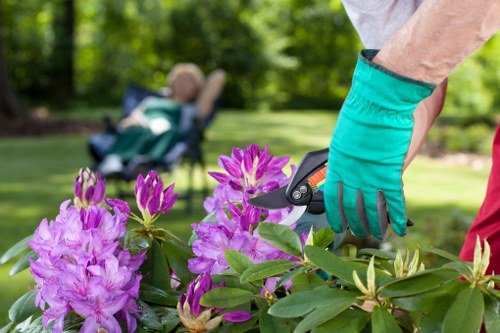 Where necessary, we introduce controls such as barriers, safe access routes, task-specific PPE, and clear communication between team members.
Our Safety Commitments
We are committed to complying with relevant health and safety requirements and to applying good practice across all garden maintenance activities. Each gardener is expected to work responsibly, report hazards promptly, and follow agreed procedures. Managers and supervisors are responsible for making sure staff are properly instructed, that equipment is suitable for use, and that work areas remain under review throughout the job.
Gardeners Hadley Wood places particular emphasis on training and supervision. Staff members receive instruction on manual handling, correct tool use, safe operation of machinery, and the handling of materials such as fertilisers, composts, and treatments. We also make sure that anyone using specialist equipment has the competence to do so safely. Where new risks are identified, procedures are updated without delay.
 Before work starts, we consider access, obstructions, ground conditions, overhead hazards, wildlife concerns, nearby occupants, and the stability of surfaces. This helps us reduce avoidable incidents such as cuts, strains, falls, and accidental contact with fragile features. If a task cannot be completed safely, it will be paused until the risk is controlled.
Working Practices and Equipment Control
All tools and machinery must be checked before use and kept in a condition that is safe and effective. Faulty equipment is taken out of service immediately. We expect staff to use the right item for the task rather than improvising, as inappropriate equipment can increase both personal risk and damage to the garden environment. PPE is issued according to need and may include gloves, eye protection, hearing protection, sturdy footwear, and high-visibility clothing where appropriate.
Manual handling is managed carefully because gardening frequently involves lifting soil, bags, pots, branches, and other heavy or awkward items. We encourage team members to assess weight, shape, and carrying distance before lifting. When loads are too heavy or difficult to move safely, the task is shared, broken down, or supported by suitable equipment. This approach reduces strain and helps prevent long-term injury.
Substances used in the course of work are stored, labelled, and handled responsibly. We take care with fuel, oils, cleaning products, and any plant treatment materials. Staff are trained to follow instructions, avoid unnecessary exposure, and wash hands after handling materials. Spillages are managed quickly, and waste is disposed of in a controlled manner to protect people and the surroundings.
Risk Management and Incident Response
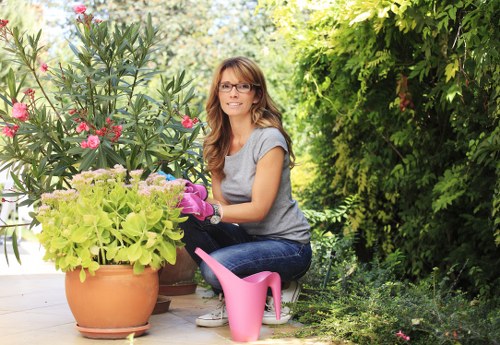 Risk assessment is a central part of our policy. We do not rely on assumptions; instead, we examine each job and decide what could cause harm and how that harm can be prevented. This includes identifying hazards related to weather, slopes, hidden debris, electrical sources, insects, sharp edges, and fragile structures. Controls are then matched to the level of risk.
If an incident, near miss, or unsafe condition occurs, it must be reported and reviewed. We treat near misses seriously because they often reveal weaknesses before anyone is hurt. Corrective action may include extra training, better supervision, changes to equipment, or adjustments to working methods. Our aim is continual improvement rather than one-off compliance.
We also promote a culture in which staff feel able to speak up if they are unsure, unwell, fatigued, or concerned about conditions. No worker should feel pressured to continue if doing so may compromise safety. Clear communication supports safer decisions, better teamwork, and more reliable service outcomes.
Review, Responsibility, and Ongoing Standards
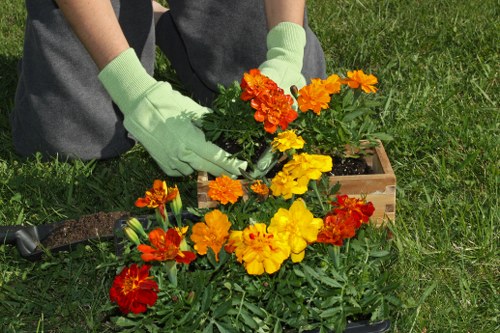 This policy is reviewed regularly to ensure it remains suitable for the services we provide and the risks associated with gardening work. Changes in equipment, work methods, legislation, or best practice may lead to updates. All staff are expected to read and follow the current version and to support a safe working culture at all times.
In practice, this means that Gardeners Hadley Wood works with care, consistency, and respect for health and safety in every job. By combining planning, training, supervision, and responsible use of tools and materials, we help create a safer environment for everyone involved. Safe working is not an optional extra; it is a core part of professional garden care.